Episode Transcript
[00:00:00] Speaker A: Waking up in a hospital bed, being told I can't walk, talk or smile. I get stressed about all these things. What can I control? Control it. If yes, do something about it. If no, I punt it immediately.
[00:00:08] Speaker B: Hey there, billionaire. Yep, I'm talking to you. If you expect to live another 31 years, you're already a billionaire. Not in money, but in the real.
[00:00:18] Speaker C: Measure of wealth, time.
[00:00:20] Speaker B: That's because 31 years is roughly a billion seconds. But most of us waste time in ways we'd never waste money. The currency of time billionaires is micro moments, then 90 second to 15 minute G. Hidden between the structured parts of your day, this podcast is about reclaiming them with quick research backed ideas to help you feel more creative, productive and alive. Welcome to Time Billionaires. Let's make your next micro moment count.
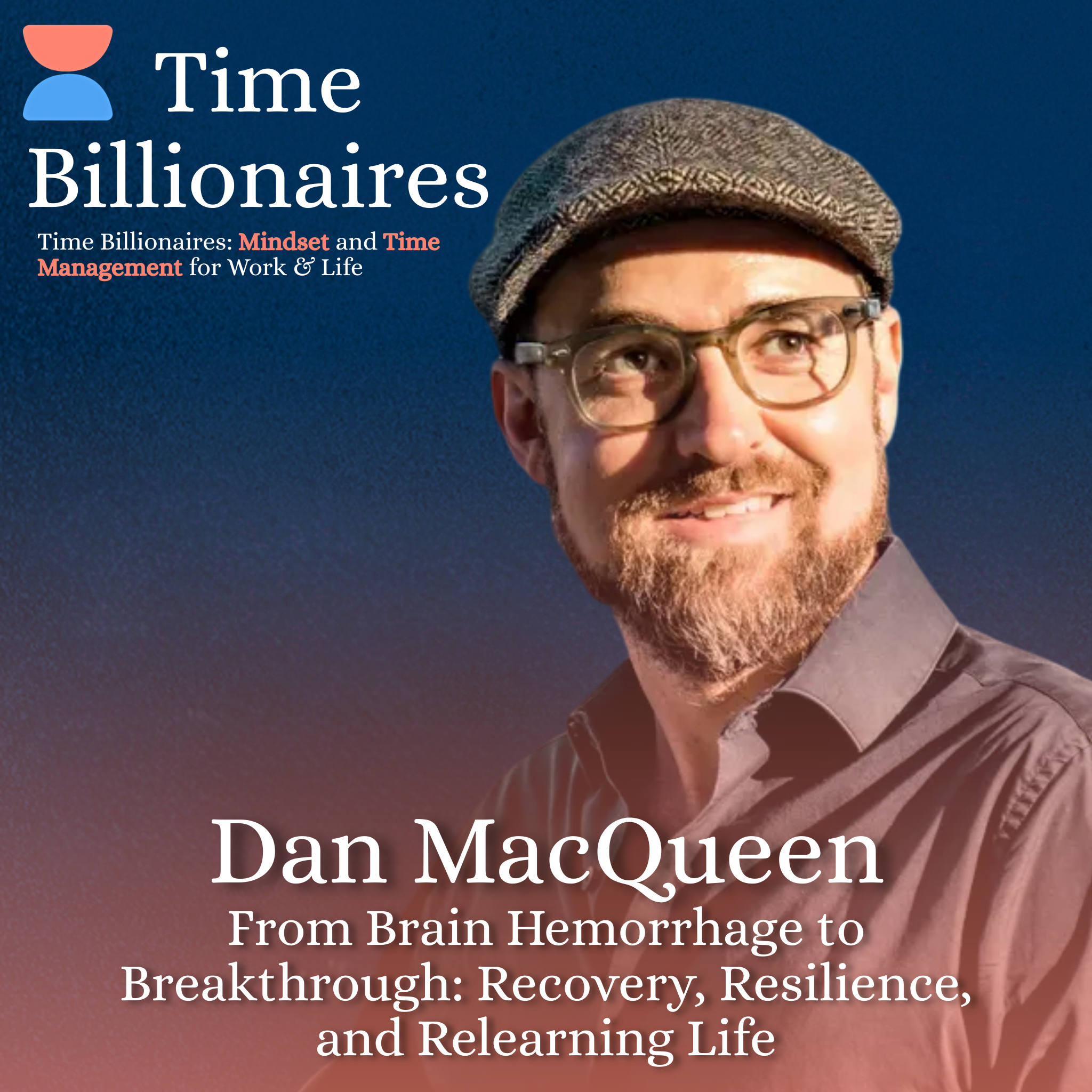
[00:00:53] Speaker C: Today's guest is Dan McQueen. At 28, Dan was living a healthy, active life until a routine optometrist appointment ended with a sealed envelope and an urgent trip to the hospital.
What followed was a devastating brain hemorrhage, two emergency surgeries, weeks in a coma, and the long road of relearning how to walk, talk, and even smile.
Today he joins us to talk about what a brain injury taught him about clarity, resilience, and starting again. Thanks for joining us, Dan.
[00:01:21] Speaker A: Thank you for having me on the show. It's a pleasure to be here.
[00:01:24] Speaker C: It's great to have you. You've been really open about your recovery and the things that it's taught you about how you live your life now.
So in terms of the experience of recovery, teaching you how to pace your time and where you put your attention, is there something that you do differently now that than you did before the injury?
[00:01:42] Speaker A: I'm much more intentional with my bandwidth and what I waste my or spend my energy on.
I really live life through a mantra of stoicism, which is control the controllables in life, I go through that frame.
Can I control it? If yes, do something about it? If no, I punt it immediately. I punt it immediately.
That simple mind frame allowed me to navigate this recovery in a way that allowed me to get back from that today.
That's not easy to do, but it's simple.
Control the controllables is something I think your audience should take on board.
[00:02:17] Speaker C: Yeah. You obviously realized at the time, given the significance of the situation, that you were in a moment that was going to change your life, of course, when you came out. But a lot of people don't realize they're in a moment that's quietly reshaping their life until they're on the other side of it. So when you look back at your recovery, is there a small decision that you made that ended up having a positive impact?
[00:02:41] Speaker A: I would say it's not a small decision, but it's a repetitive decision. So a decision today to keep going.
Every day you look at yourself in the mirror, I'm going to try again today. I'm going to try again today.
I always say try. That's the most important bit.
You can't lose that muscle of trying. You can't throw your hands up and say, this isn't fair. You're right, it's not fair. But guess what?
It's still happening. Right? A decision a day, every day, you choose to fight the fight and move forwards. And that's what got me to where I'm at today and continue to progress to where I'm going next.
[00:03:15] Speaker C: The last week or so, I've been fixating on a decision that I made years ago that I wish I had made differently now. And I have done episodes and rumination and regret. But for whatever reason, I find myself just really fixated on the what ifs of what if I had decided differently four years ago? What if I had had information then that I do now? For anyone else like me who's stuck in this what if cycle, do you have advice for how to break out of it?
[00:03:44] Speaker A: Woulda, coulda, shoulda, doesn't matter.
Make a decision. Stick to the choice you made the best decision at the time being, and adapt to it. I mean, it's not always gonna be perfect, but it's progress over perfection.
You're gonna make mistakes, you're gonna make fumbles.
That's life. It's not perfect, it's not clean, but it's forward every day, forwards.
So don't dwell on mistakes you made in the past. Learn from them and adapt and move forwards.
But easier said than done, as I'm sure you know.
[00:04:15] Speaker C: Yeah, easier said than done for sure. It's funny how for different people, what those decisions are, the ones that we get hung up on, they're different for all of us. For me, it's often career slight tweaks or decisions. But yeah, woulda, shoulda, coulda, you're right.
If somebody has just five spare minutes today, what's something you think they should do with that time?
[00:04:36] Speaker A: So this isn't mine, but I heard this online and I want to share it with your group because I think it's really helpful.
If you have five minutes a day, start writing a list of Things in your life that are an issue or a problem. Coming up.
Divide that list in controllables and non controllables. Focus on what you can control and punt the rest.
The goal here is to minimize your decision making and minimize your stress.
Can I control this? If yes, do something about. If no, I punt it immediately. Go through everything in life this way. Can I control this? If yes, do something about. If no, punt it.
Aim small, Ms. Small. Okay. Keep things simple in your life and watch how the world conspires to help you reach those goals you've staked in the ground.
[00:05:14] Speaker C: Hmm.
Do you really punt it that simply that you realize it's uncontrollable and you just never think about it ever again?
[00:05:23] Speaker A: Yeah.
[00:05:24] Speaker C: Wow.
[00:05:25] Speaker A: Because there's been so much in my life that has been insane.
Waking up in a hospital bed, being told I can't walk, talk, or smile. I get stressed about all these things. This is insane. I was a healthy, active guy yesterday.
No, no, no. What can I control? I can control how I start rehabbing now.
I can control my mindset of how I view this setback. I can control these things, but I can't control what happened to me but how I respond.
So don't get bogged down in the what it could have, should have, or this could have happened differently. It happened, man. Life's not fair.
It's not my fault. But it's my responsibility now. It's my responsibility to navigate this change and come back stronger than I was before. And every day I'm driven to do that. A decision today to make this happen.
So punt the rest and watch it conspire to help you be successful.
[00:06:13] Speaker C: Right after we hop off, I'll make that list. Thanks for the advice, Dan. It's been great.
[00:06:23] Speaker B: Thanks for spending this micro moment with me. If you found it valuable, share it with a fellow time billionaire and give us a rating to help others discover the power of micro moments. For more ways to reclaim your time, check out timebillionaires.org and follow me. Rebecca Shattucks on LinkedIn.
[00:06:39] Speaker C: See you next time.
Sat.